
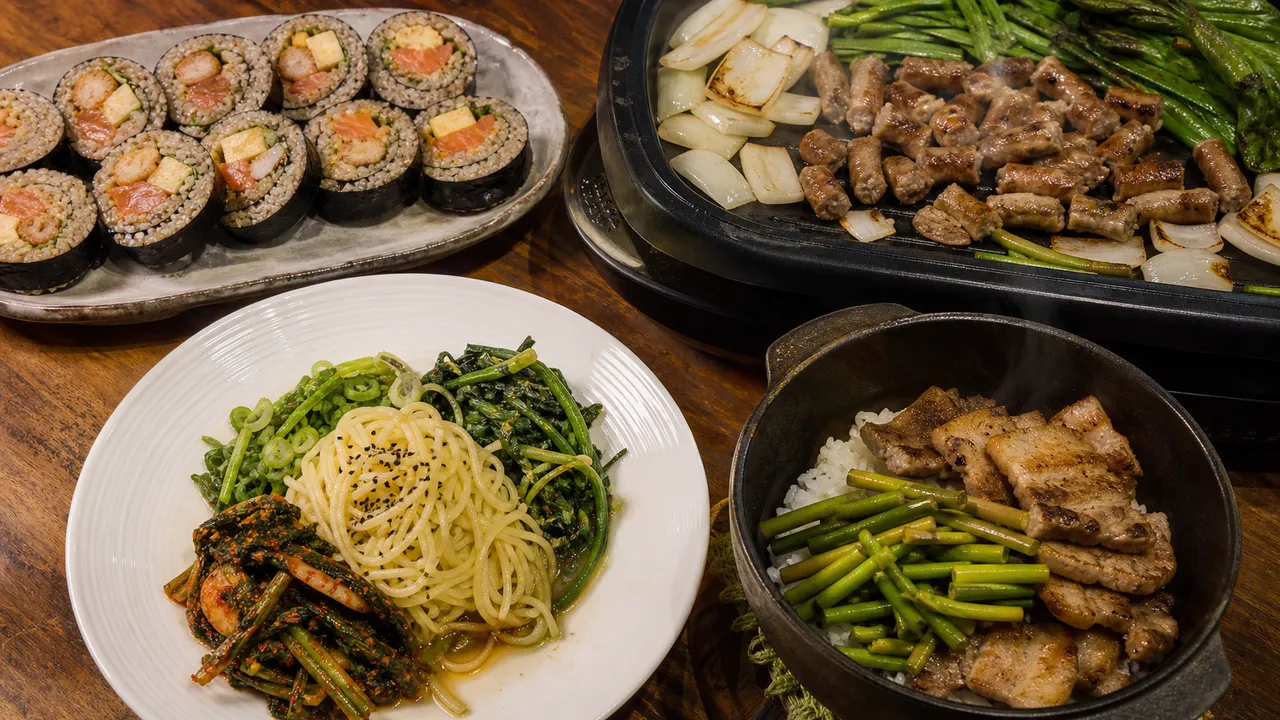
4 Hearty Home-Cooked Recipes Including Buckwheat Futomaki an
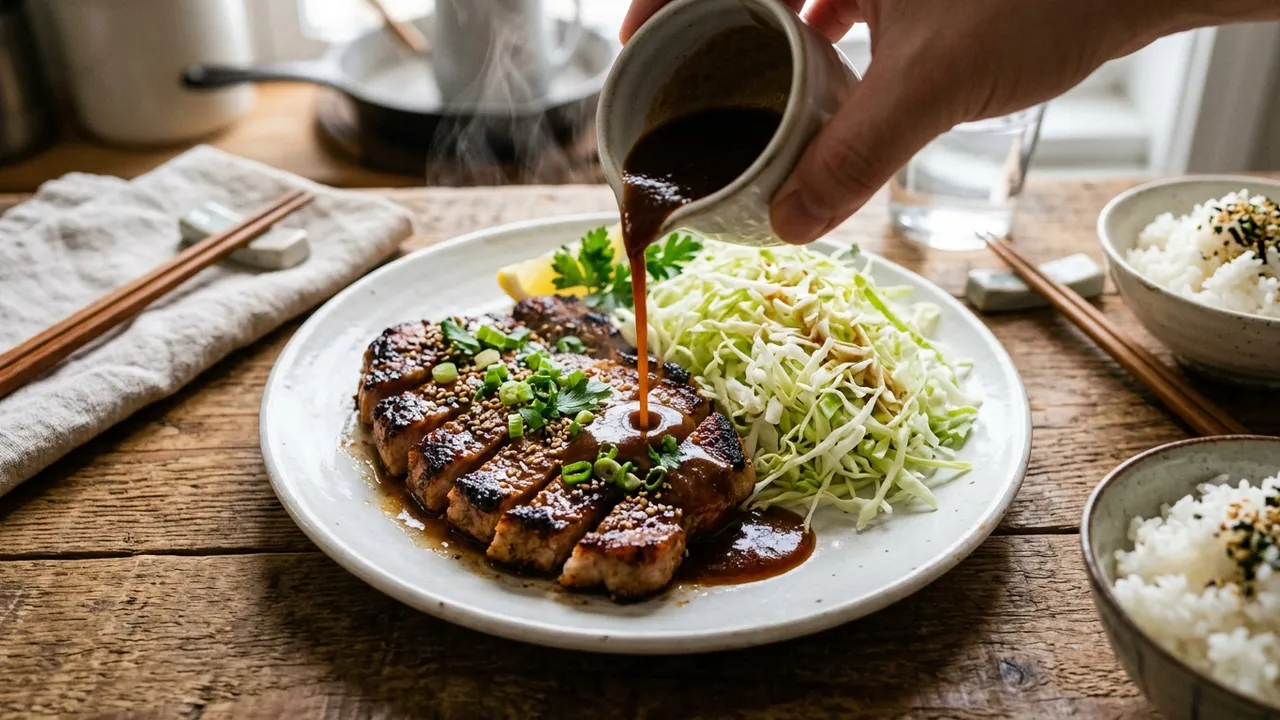
* 이미지는 AI가 생성한 참고 이미지로, 실제 조리 결과물과 다를 수 있습니다.
Introducing 4 easy and delicious home-cooked meals: Buckwheat Pipe Futomaki, spicy and savory Maekjeok-gui (맥적구이) with Yeolmu (열무) Perilla Oil Cold Pasta, hearty Deungchon Kalguksu (등촌칼국수) with So Gopchang-gui (소곱창구이), and satisfying Hangjeongsal (항정살) Garlic Scape Pot Rice with Yeolmu Muk-guk (열무 묵국).
📋 4 recipes — Select to view
A nutrition-packed buckwheat noodle futomaki recipe generously filled with buckwheat noodles, salmon, egg, shrimp tempura, and cucumber.
📝 Editor's Notes
This hearty futomaki is generously filled with buckwheat noodles, salmon, egg roll (dalgyal-mari), shrimp tempura, and cucumber, all rolled in nori (김).
Instead of soft rice, buckwheat noodles offer a clean taste with a satisfying chewiness.
The richness of salmon, crispiness of shrimp tempura, and crunch of cucumber come together perfectly in every bite.
The spicy and savory special sauce further enhances its flavor.
Preparing ingredients and rolling can be a bit tricky, so the difficulty level is intermediate.
It's a great menu for hot summer days when appetites are low, picnics, or entertaining guests.
🛒 Ingredient Tips
Choose fresh salmon fillet suitable for sashimi.
It should have a moist, glossy surface and a vibrant orange color, indicating freshness.
Salmon with clear white fat marbling is fattier and more delicious.
For buckwheat noodles, the higher the buckwheat content, the deeper the flavor, so check the ingredient ratio on the back of the package.
Look for cucumbers that are firm, straight, and still have their spines.
If using frozen shrimp tempura, those with a thick coating and straight shrimp will result in a more attractive final shape.
🔄 Substitution Guide
If fresh salmon is a concern regarding freshness or difficult to find, smoked salmon is a good alternative.
The seasoning can be reduced to account for the saltiness of smoked salmon.
If raw fish is not preferred, cooked imitation crab meat or tuna mayo can be used instead.
Buckwheat noodles can be replaced with somyeon (소면) or rice; using rice will make it closer to traditional futomaki and more filling.
If frying shrimp is troublesome, you can substitute with ingredients like imitation crab sticks or crunchy vegetables such as cucumber or pickled radish (단무지).
If you have a shellfish allergy, be sure to omit the shrimp tempura.
Omit wasabi if serving to children.
🥘 Ingredients
👨🍳 Cooking Points
The key to a tender egg roll (dalgyal-mari) is to cook it slowly over low heat.
If the heat is too high, only the outside will cook and it may crack.
Pour a thin layer, roll it up when half-cooked, then pour more egg mixture and repeat until soft and complete.
After boiling, rinse the buckwheat noodles thoroughly under cold water to remove starch and prevent sticking.
Squeeze out excess water firmly by hand.
Since there are many ingredients, the nori (김) can easily tear; overlap 1.5 sheets of nori, moistening the overlapping part, and spread the noodles thinly up to two-thirds of the sheet.
Filling it to the very end will cause it to overflow when rolling.
Roll it tightly to prevent it from falling apart when sliced.
👨🍳 Directions
Preheat the air fryer to 350°F (180°C). Air fry 4 shrimp tempura for 10 minutes. Store any remaining shrimp tempura in a zip-top bag.
Crack 2 eggs into a bowl, add a pinch of salt and a dash of mirin (맛술), and whisk until well combined and smooth. Lightly grease a square pan and pour in a thin layer of the egg mixture.
Once the egg starts to set, roll it up from one side. Pour in more egg mixture, lifting the rolled egg to allow it to spread underneath, and repeat the rolling process several times to create an egg roll (dalgyal-mari).
Peel the cucumber, remove the seeds, and julienne thinly.
Pat the salmon fillet dry with a paper towel, then slice it into long, bite-sized pieces.
Boil the buckwheat noodles according to package instructions. Rinse thoroughly under cold water and squeeze out excess water. Season with a small amount of tsuyu (쯔유) and perilla oil (들기름).
Overlap one whole sheet of nori (김) with half a sheet, moistening the overlapping part with a little water to secure. Spread a thin layer of buckwheat noodles over about two-thirds of the nori.
Arrange the salmon, egg roll (dalgyal-mari), julienned cucumber, and shrimp tempura neatly over the buckwheat noodles.
Roll up the futomaki tightly, ensuring the ingredients stay in place.
Lightly brush the surface of the rolled futomaki with perilla oil (들기름).
Slice the finished futomaki into bite-sized pieces.
Mix 1 tbsp mayonnaise, 0.5 tbsp Sriracha, 0.5 tbsp tsuyu (쯔유), and a touch of wasabi (와사비) to make the dipping sauce. Serve alongside the futomaki.
💡 Tips
For a tender egg roll (dalgyal-mari), cook slowly over low heat.
If there are many ingredients in the futomaki, moisten the overlapping nori sheets slightly before rolling to prevent them from tearing and ensure a tight roll.
Seasoning the buckwheat noodles in advance with tsuyu (쯔유) and perilla oil (들기름) enhances the flavor of the futomaki.
Serving with the spicy and savory special sauce further elevates the taste of the futomaki.
📦 Storage & Reuse
Rolled and sliced futomaki is best consumed on the same day, as the nori can become soggy and salmon can spoil easily.
If there are leftovers, wrap each piece individually in plastic wrap and refrigerate, consuming within one day.
Freezing is not recommended due to the fresh salmon.
The sauce can be stored separately in an airtight container in the refrigerator for 3-4 days.
Leftover egg roll (dalgyal-mari) should be eaten within 2 days when refrigerated, and shrimp tempura can be reheated in an air fryer at 350°F (180°C) for 3-4 minutes to restore crispiness.
🥢 Who This Is For
This dish is perfect for when you lack appetite in the summer or want a light yet hearty meal.
It can be beautifully served as a picnic lunch, for entertaining guests, or on a child's birthday table.
It pairs well with a refreshing miso soup, clear udon broth, or pickled radish.
Served with the special spicy sauce, it also makes a great adult appetizer.
🔥 Nutrition Info
Estimated calories per serving are approximately 550-650 kcal.
Protein content is generous at about 30-35g, thanks to salmon, eggs, and shrimp tempura.
Fat is about 25-30g, contributed by the fried ingredients, perilla oil (들기름), and mayonnaise.
Carbohydrates from buckwheat noodles and tempura coating are around 55-65g.
Salmon is rich in omega-3 fatty acids and vitamin D, while buckwheat contains rutin, dietary fiber, and magnesium.
Eggs are a complete protein source, making this a well-balanced meal nutritionally.
However, sodium and fat content can increase due to the sauce and fried items, so consume the sauce in moderation.
💬 Frequently Asked Questions
- Q. What ingredients do I need for 4 Hearty Home-Cooked Recipes Including Buckwheat Futomaki and Maekjeok Cold Pasta?
- Main ingredients include Fried Shrimp, Eggs, Salt, Mirin (맛술), Cucumber. For salmon, choose sashimi-grade fillets with vibrant orange flesh and fine white marbling of fat, indicating freshness. It should spring back firmly when pressed and have no fishy odor. Buckwheat noodles with a higher buckwheat content are more savory but break easily. If you're a beginner, a product with some wheat flour mixed in will be easier to roll. For gim (김), use traditional gim (재래김) or sushi-grade gim that is glossy, thick, and without holes, as it will be less likely to tear when rolling. Choose cucumbers that are straight, firm, and have fresh thorns.
- Q. What are the key tips for making 4 Hearty Home-Cooked Recipes Including Buckwheat Futomaki and Maekjeok Cold Pasta?
- The most important part is the egg roll. Cook it slowly over low heat, pouring the egg mixture in several batches and rolling it to achieve a soft and fine texture. If the heat is too high, the surface will puff up and crack. After boiling, the buckwheat noodles must be thoroughly rinsed in cold water to remove starch and squeezed dry to prevent the gim (김) from becoming soggy. If moisture remains, it will tear while rolling. Place the ingredients only up to two-thirds of the gim (김) and roll tightly with your fingertips to keep the filling from coming loose. When slicing, lightly wet the knife to get clean cuts.
- Q. How should I store leftover 4 Hearty Home-Cooked Recipes Including Buckwheat Futomaki and Maekjeok Cold Pasta?
- Like kimbap (김밥), it's best enjoyed the same day it's made. If there are leftovers, wrap them tightly, including the cut sides, and refrigerate, consuming within a day. If refrigerated, the buckwheat noodles used instead of rice will harden and the gim (김) will become soggy, so freezing is not recommended. Since it's a dish eaten cold, there's no need to reheat it. After refrigeration, leaving it at room temperature for about 10 minutes will make the texture much softer. Leftover egg roll and julienned cucumber can be saved and used as toppings for salads or bibim-myeon (비빔면).
- Q. How many calories are in 4 Hearty Home-Cooked Recipes Including Buckwheat Futomaki and Maekjeok Cold Pasta?
- Estimated at approximately 480-560 kcal per serving. Fat is estimated at approximately 22-28g from fried shrimp, mayonnaise, and perilla oil; protein at about 24-30g from salmon, egg, and shrimp; and carbohydrates at about 45-55g from buckwheat noodles and the fried coating. Salmon is rich in omega-3 fatty acids and vitamin D, while eggs provide complete protein and choline. Buckwheat contains rutin, dietary fiber, and magnesium, making it more satisfying than refined wheat flour noodles. However, due to the fried ingredients and mayonnaise sauce, the calorie count is higher, so adjust the sauce to your preference.
- Q. Can I substitute ingredients in 4 Hearty Home-Cooked Recipes Including Buckwheat Futomaki and Maekjeok Cold Pasta?
- If salmon is too expensive or difficult to find, you can substitute it with smoked salmon, imitation crab meat, or canned tuna. Smoked salmon offers a stronger savory and salty taste, while imitation crab meat has a mild flavor that children often enjoy. Instead of store-bought frozen fried shrimp, you can use fried calamari rings, fried imitation crab meat, or simply imitation crab meat for a lighter option. The crispiness might be slightly reduced, but preparation becomes easier. Buckwheat noodles can be replaced with somyeon (소면) or soba (そば). Somyeon is softer but less savory. If you don't have Tsuyu (쯔유), you can mix soy sauce with a little Mirin (맛술) and sugar as a substitute.
💬 Comments
No comments yet. Be the first to comment!