
Hong Seok-cheon and Lee Won-il's Food Tour: A 100-Year-Old Traditional Chinese Restaurant in Yeongdeungpo Recipe
This is a mukbang video exploring the secrets and savoring authentic Chinese dishes like Ganjjajang (간짜장), Gejal Samseul (게살삼슬), and Tangsuyuk (탕수육) at 'Daegwanwon', a century-old Chinese restaurant passed down through three generations.
📋 3 recipes — Select to view
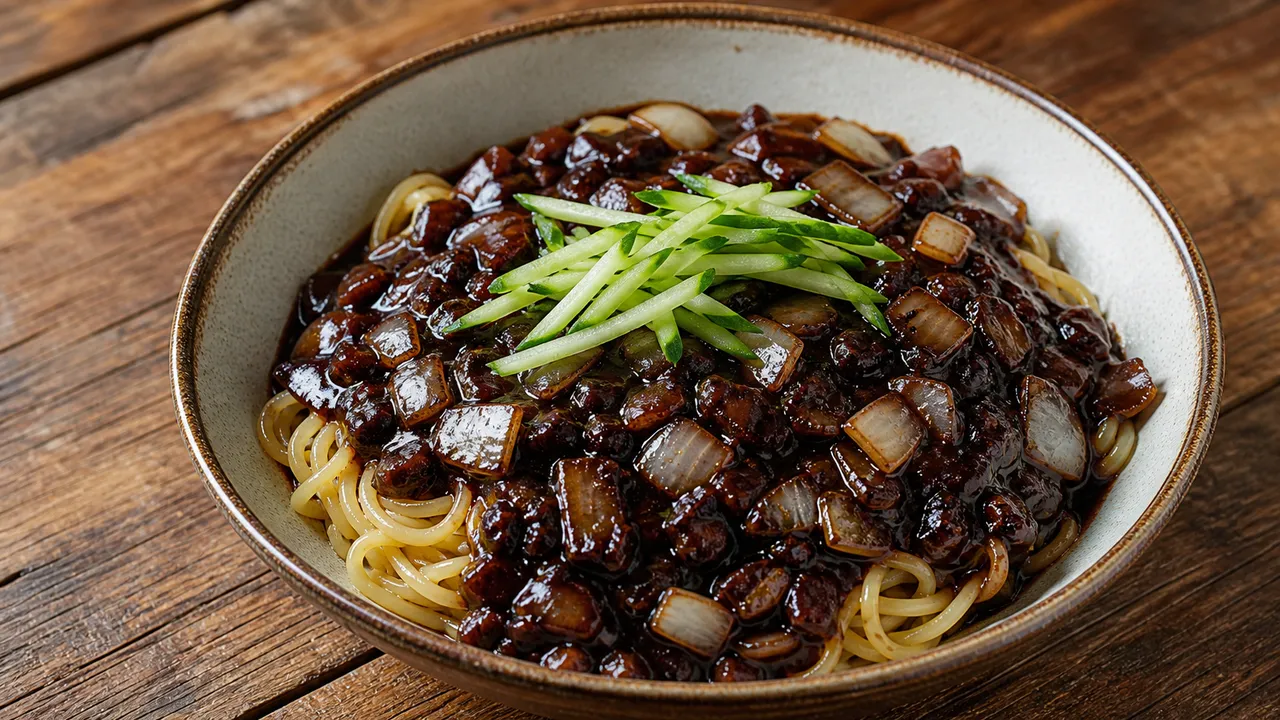
Authentic Ganjjajang (간짜장) that brings out the natural flavors of ingredients by stir-frying them dry without water.
📝 Editor's Notes
Daegwanwon Ganjjajang (간짜장) is an authentic recipe that maximizes the natural flavors of ingredients by stir-frying them dry without water.
Unlike regular jjajang (짜장), it boasts a rich and deep flavor from directly stir-frying key ingredients like Chunjang (춘장) and onions until the oil separates.
The fresh and clean taste of freshly stir-fried sauce mixed with noodles is exquisite.
We highly recommend it for those who prefer a thick sauce that highlights the ingredients' flavors.
This dish is best enjoyed immediately at the restaurant rather than through delivery.
A sprinkle of Gochugaru (고춧가루) adds a touch of spice, making the flavor more diverse and preventing it from becoming monotonous.
🛒 Ingredient Tips
The key to Ganjjajang (간짜장) lies in fresh onions and good quality Chunjang (춘장).
For onions, choose those with a strong sweetness and moderate moisture.
Fresh onions are firm, glossy, and feel heavy.
For Chunjang (춘장), using a professional grade Chunjang (춘장) used by famous Chinese restaurants will yield a deeper flavor.
Among commercial Chunjang (춘장) products, it's advisable to check the ingredient list and select one with fewer unnecessary additives and a higher soybean content.
For noodles, using fresh Chinese-style noodles with their characteristic chewy texture will bring you closer to a restaurant-quality taste.
For julienned cucumber, choose fresh and crisp cucumbers and slice them thinly.
🔄 Substitution Guide
You can enjoy Ganjjajang (간짜장) with rice instead of noodles, as 'Ganjjajang (간짜장) rice.' If you wish to reduce carbohydrate intake, you can substitute konjac noodles or tofu noodles, though the unique chewy texture may be slightly diminished.
If you don't have onions or want to add more sweetness, you can julienne cabbage and stir-fry it along with the other ingredients.
Cabbage is rich in dietary fiber and provides a sweet taste, enhancing the flavor of Ganjjajang (간짜장).
Using a small amount of Doenjang (된장) mixed with Chunjang (춘장) can create a more savory and Korean flavor, but it may differ from the deep and rich taste of original Ganjjajang (간짜장).
If julienned cucumber is unavailable, lightly blanched young greens or bean sprouts can be added for a crispy texture.
🥘 Ingredients
👨🍳 Cooking Points
The most important cooking points for this Ganjjajang (간짜장) recipe are 'stir-frying dry without water' and 'stir-frying thoroughly until the oil separates.' When stir-frying Chunjang (춘장) and onions together, do not add any water; instead, stir-fry them over medium heat for at least 10 minutes.
The sauce is well-cooked when the onions become translucent, the characteristic bitterness of Chunjang (춘장) disappears, a savory aroma emerges, and oil begins to separate from the sauce.
It's crucial to maintain medium heat and stir continuously to prevent burning.
Also, even if the sauce feels thick when mixing with the noodles, it's better to mix thoroughly to ensure the noodles and sauce are well combined rather than adding more sauce.
The noodles will absorb the sauce and achieve the right consistency.
👨🍳 Directions
Place noodles in a bowl and top with julienned cucumber.
Generously spoon the Ganjjajang (간짜장) sauce, which has been dry-fried without water until the oil separates, over the noodles.
Mix the noodles and sauce well and enjoy.
Sprinkle Gochugaru (고춧가루) to taste, if desired.
💡 Tips
The 'Gan' in Ganjjajang (간짜장) comes from the Chinese character '乾' (gān), meaning 'dry,' which refers to jjajang (짜장) stir-fried dry without water.
It is generally more expensive than regular jjajang (짜장) due to the greater number of ingredients used.
When mixing, be careful not to add too much sauce if it feels thick, as it can become too salty and dense.
It tastes best when eaten immediately after serving, as the noodles tend to swell quickly. For this reason, delivery is often difficult.
Sprinkling Gochugaru (고춧가루) adds a slight spiciness, creating an excellent flavor combination.
📦 Storage & Reuse
Ganjjajang (간짜장) is best enjoyed immediately as the noodles tend to swell quickly.
Leftover Ganjjajang (간짜장) sauce can be stored in an airtight container in the refrigerator for about 3-4 days.
For longer storage, freeze it in individual portions for up to a month.
After thawing, reheat it by stir-frying over low heat or warming it in the microwave.
Please note that reheating after freezing might slightly diminish the original rich and fresh flavor.
Leftover sauce can also be enjoyed with rice as Ganjjajang (간짜장) rice, or transformed into a Jjajang (짜장) rice bowl by adding tofu or mushrooms.
🥢 Who This Is For
This Ganjjajang (간짜장) is excellent for a special family meal out or when you want to enjoy a delicious treat on the weekend.
It's a flavor that will satisfy everyone from children to adults who love Jjajangmyeon (짜장면).
Especially, freshly stir-fried, warm Ganjjajang (간짜장) can be the best choice when you need to relieve stress and lift your spirits.
Recommended side dishes include crispy Tangsuyuk (탕수육) or refreshing Jjampong (짬뽕) soup.
The sweet and sour Tangsuyuk (탕수육) enhances the savory richness of the Ganjjajang (간짜장), and the Jjampong (짬뽕) soup will cleanse your palate from any potential greasiness.
🔥 Nutrition Info
The estimated calorie count for a single serving of Daegwanwon Ganjjajang (간짜장) is approximately 700-900 kcal.
This can vary depending on the type and quantity of noodles, as well as the amount of Chunjang (춘장) and oil used.
Approximate nutritional values can be estimated at about 90-120g carbohydrates, 30-50g fat, and 20-30g protein.
Onions, a main ingredient, are rich in dietary fiber and Vitamin C, and soybeans, the main ingredient of Chunjang (춘장), are a source of protein.
However, Jjajang (짜장) sauce tends to be high in sodium and saturated fat, so it's advisable to consume it in moderation.
Adding julienned cucumber can help replenish vitamins and water, and aid in sodium excretion.
Gochugaru (고춧가루) can also be expected to boost metabolism.
💬 Comments
No comments yet. Be the first to comment!