
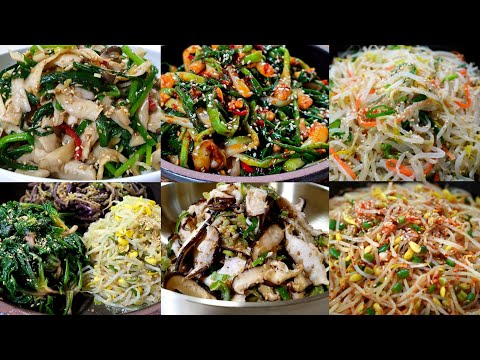
Spinach Namul (Seasoned Spinach)
Fragrant and tender seasoned spinach side dish.
📝 Editor's Notes
Gosari-namul (고사리나물) is a tender yet hearty namul that is an indispensable part of Korean cuisine.
It features a delicate perilla oil aroma and savory flavor.
The deep taste, enhanced by anchovy broth, offers a comforting and non-stimulating flavor profile.
The straightforward cooking process makes it easy for even beginner cooks.
Marinating the fernbrake in seasoning beforehand allows the flavors to penetrate deeply, resulting in a more delicious dish.
A key technique is stir-frying, then adding broth and simmering with a lid to maximize the fernbrake's tenderness.
It's a wonderful dish to accompany any warm meal, all year round.
🛒 Ingredient Tips
The core ingredient for gosari-namul (고사리나물) is, of course, boiled fernbrake.
Good fernbrake should not be overly tough or hard; it should be moderately tender yet firm.
Fresh fernbrake has a natural brownish hue, not too dark.
For green onions, the white part of the stalk has a better aroma and sweeter taste, making it more suitable for namul than the green leafy part.
While making anchovy broth yourself with kelp and anchovies yields a deeper flavor, commercial broth packets or tablets are convenient alternatives.
For perilla oil, make sure to use fresh oil that has been recently pressed to preserve its nutty aroma.
🔄 Substitution Guide
If anchovy broth is unavailable or if you have a seafood allergy, you can substitute it with kelp broth or rehydrated shiitake mushroom water.
The flavor will be milder than anchovy broth but will still add a deep umami.
While using only sesame oil instead of perilla oil is acceptable, the unique savory and rich aroma of perilla oil may be diminished.
Conversely, if you don't have sesame oil, you can finish the dish solely with perilla oil.
If using regular soy sauce (jin-ganjang) instead of guk-ganjang (국간장), reduce the amount slightly as it has a higher salt content.
If anchovy sauce is unavailable, you can substitute with sand lance fish sauce (kkanaeri-aekjeot), but it's important to adjust the quantity to taste.
🥘 Ingredients
👨🍳 Cooking Points
There are two important cooking points that determine the flavor of this gosari-namul (고사리나물).
First, marinating the fernbrake in the seasoning for 10 minutes beforehand.
This allows the flavors to penetrate deeply into the fernbrake, making the namul taste much richer.
Second, after stir-frying, add 150ml of anchovy broth, cover, and simmer over medium heat for 4 minutes.
During this stage, the fernbrake absorbs the broth, becoming even more tender and moist.
It's crucial to stick to 4 minutes, as cooking too long can make the texture mushy.
Finally, turn off the heat and mix in sesame oil with the residual heat to enhance the fragrance.
👨🍳 Directions
Add 1 tbsp of salt to boiling water, then add the prepared spinach and blanch for 30 seconds.
After 30 seconds, flip the spinach and blanch for another 30 seconds (total 1 minute).
Rinse the blanched spinach in cold water 3 times, then drain in a colander.
Gently squeeze out excess water from the rinsed spinach (be careful not to squeeze too much).
In a bowl, combine the blanched spinach with 1 tbsp of guk-ganjang (국간장), 0.25 tsp of salt, 1 tbsp of minced garlic, 1 tbsp of toasted sesame seeds, and 1.5 tbsp of sesame oil. Mix well.
💡 Tips
Adding a pinch of salt when blanching spinach helps preserve its vibrant green color.
Gently squeeze out excess water from the blanched spinach to keep it moist.
📦 Storage & Reuse
Store leftover gosari-namul (고사리나물) in an airtight container in the refrigerator for 3-4 days to maintain freshness.
For longer storage, portion it into single servings and freeze.
It can be kept frozen for up to about 1 month.
To thaw, either let it naturally defrost in the refrigerator or gently warm it in the microwave.
Adding a spoonful or two of water during reheating helps prevent moisture evaporation, keeping it moist.
Leftover gosari-namul can also be used as an ingredient for bibimbap or finely chopped and added to Korean savory pancakes (jeon) for a delightful variation.
🥢 Who This Is For
Gosari-namul (고사리나물) is perfect when you crave warm homemade food, or for holiday meals and entertaining guests.
It's a dish that can be enjoyed without burden, loved by both children and adults.
It pairs especially well with a light beef and radish soup (sogogi-muguk) or a hearty soybean paste stew (doenjang-jjigae) for a richer meal.
It also makes an excellent ingredient for bibimbap.
We highly recommend it for anyone looking for a hearty and healthy meal.
🔥 Nutrition Info
Based on this recipe, estimated for 2-3 servings, one serving of gosari-namul (고사리나물) is expected to contain approximately 150-200 calories.
It's estimated to have about 15-20g of carbohydrates, 5-8g of protein, and 8-12g of fat.
Fernbrake is rich in dietary fiber, which aids in bowel health, and also contains minerals like iron and calcium, beneficial for preventing anemia and promoting bone health.
Perilla oil and sesame oil are rich in unsaturated fatty acids, positively impacting cardiovascular health, and contain Vitamin E, which assists in antioxidant activity.
Overall, it can be considered a healthy Korean side dish with good nutritional balance.
💬 Comments
No comments yet. Be the first to comment!