
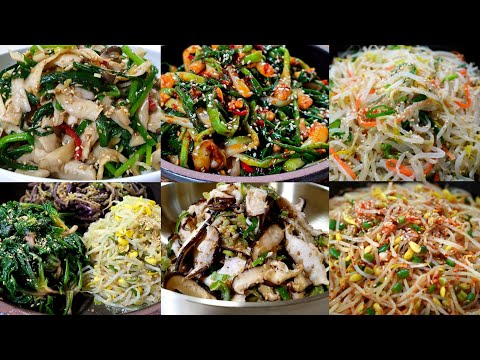
Seasoned Mung Bean Sprouts (숙주나물)
A refreshing and crunchy mung bean sprout side dish.
📝 Editor's Notes
This Seasoned Scallion Salad (쪽파무침) recipe is an excellent homemade side dish with a delightful balance of crisp texture and a spicy-sweet flavor.
Its key features are the slightly blanched scallions that retain their crunch and the deep flavor created by a blend of various seasonings.
It's not overly spicy, making it enjoyable for those who aren't keen on hot food.
Served over warm rice, it's so satisfying that you won't need any other side dishes.
It's a delicious recipe that allows you to fully appreciate the fresh aroma of seasonal scallions, appealing to all ages.
The preparation process is straightforward, so even novice cooks can easily give it a try.
🛒 Ingredient Tips
Choose scallions (쪽파) with plump roots and fresh, elastic green leaves.
Avoid those that are withered or have many yellow leaves.
Their peak season is typically spring and autumn, which is when they offer the best taste and aroma.
Fresh red chili peppers should have a vibrant red color and a glossy sheen.
Also, check that the seeds are clean.
Both anchovy fish sauce (멸치액젓) and sand lance fish sauce (까나리액젓) are good, but anchovy fish sauce provides a deeper umami, while sand lance fish sauce offers a cleaner taste.
You can choose according to your preference.
Good ingredients are fundamental to delicious cooking, so it's no exaggeration to say that selecting fresh scallions dictates the flavor of this salad.
🔄 Substitution Guide
Instead of regular scallions (쪽파), you can use thin green onions (실파) or leeks (대파).
Thin green onions offer a delicate taste and texture similar to scallions, while leeks have a stronger aroma and sweetness.
If using leeks, it's good practice to julienne the white part and soak it in cold water for about 10 minutes to reduce its pungency before use.
If red chili peppers are unavailable, you can add a small amount of minced Cheongyang chili pepper (청양고추) or slightly increase the amount of chili powder for extra spiciness.
However, be mindful of the strong heat from Cheongyang chili peppers.
If you don't have plum extract (매실액), you can substitute with sugar or oligosaccharide, though you might miss the unique refreshing taste and digestive benefits of plum extract.
Fish sauce (액젓) can also be replaced with salted shrimp (새우젓) to add umami.
🥘 Ingredients
👨🍳 Cooking Points
The most crucial cooking points for this Seasoned Scallion Salad (쪽파무침) are the blanching time for the scallions and thorough draining.
It's important not to exceed a total of 40 seconds: blanch the root ends in boiling water with coarse salt for 10 seconds, then add the rest of the scallion and blanch for another 30 seconds.
Over-blanching will make them mushy and lose their crisp texture.
After blanching, immediately rinse the scallions thoroughly in cold water to cool them, then squeeze out as much water as possible.
Any remaining water will dilute the seasoning and make the taste bland.
Finally, remember that preparing the seasoning sauce in advance allows the ingredients to meld for a deeper flavor, and it helps the sauce coat the scallions evenly when mixing.
👨🍳 Directions
First, remove the husks from the mung bean sprouts and wash them thoroughly 3 times. Drain the washed sprouts in a colander.
Cut 50 g of garlic chives to a similar length as the mung bean sprouts, and thinly julienne a small amount of carrot.
Mince 1 Cheongyang chili pepper (청양고추).
Place the mung bean sprouts in a pot, add 4 tbsp of kombu broth, cover, and steam on high heat for 3 minutes.
After 3 minutes, when the mung bean sprouts are slightly undercooked, add the garlic chives. Toss them, and once the chives wilt, immediately transfer everything to a colander and spread them out to cool.
In a bowl, combine the cooled mung bean sprouts and garlic chives, carrot, Cheongyang chili pepper (청양고추), 1 tbsp of Korean soup soy sauce (국간장) or fish sauce (액젓), 0.5 tsp of salt, 1 tbsp of minced garlic, 1 tbsp of toasted sesame seeds (깨소금), and 1 tbsp of sesame oil. Gently mix everything together.
Transfer to a serving dish and sprinkle with whole sesame seeds to finish.
💡 Tips
Ensure all husks are well removed from the mung bean sprouts for a clean and delicious side dish.
Do not overcook the mung bean sprouts and garlic chives to maintain their crisp texture.
Do not rinse the cooked mung bean sprouts; season them directly to preserve their savory flavor.
📦 Storage & Reuse
It's best to store the finished Seasoned Scallion Salad (쪽파무침) in an airtight container in the refrigerator.
To enjoy it at its freshest, it's recommended to consume it within 2-3 days.
Freezing is not recommended as it can alter the crisp texture of the scallions.
As time passes, water may form from the scallions, diluting the seasoning, so portioning and storing only what you'll eat is a good idea.
If you have leftover scallions, you can use them for scallion pancakes (쪽파전), scallion kimchi (쪽파 김치), or as a garnish for ramen or soup dishes.
When reheating the salad, briefly microwave it or let it sit at room temperature to remove the chill; be careful not to overheat it, as this can make the texture mushy.
🥢 Who This Is For
This Seasoned Scallion Salad (쪽파무침) is a perfect clean side dish for housewarming parties or guest meals.
It pairs wonderfully with plain meat dishes or grilled fish, balancing the flavors and creating a richer dining experience.
It's especially good with grilled pork belly (삼겹살 구이) or boiled pork wraps (보쌈), as it cuts through the richness and adds a refreshing note, making them a great match.
The spicy-sweet seasoning is appetizing, making it an excellent side dish for rice and a fine accompaniment for drinks.
It might be a bit spicy for children, so if eating with kids, we recommend adjusting the amount of chili powder or preparing another soy-sauce-based salad.
🔥 Nutrition Info
This Seasoned Scallion Salad (쪽파무침) is estimated to be approximately 80-100 kcal per serving.
Scallions (쪽파) are low in calories and rich in various nutrients such as vitamins A, C, calcium, and iron.
Vitamin C, in particular, helps boost immunity, and calcium is beneficial for bone health.
The oligosaccharide and plum extract (매실액) used in the seasoning are classified as carbohydrates, and sesame oil provides healthy fats.
The protein content is relatively low, but a small amount of protein can be obtained from the fish sauce (액젓).
Overall, it's a vegetable-centric side dish rich in dietary fiber, which benefits gut health.
Sodium content can vary depending on the seasoning, so those who prefer less salt can adjust the amount of soy sauce or fish sauce.
For a balanced diet, it is recommended to consume this dish with protein-rich foods.
💬 Comments
No comments yet. Be the first to comment!