
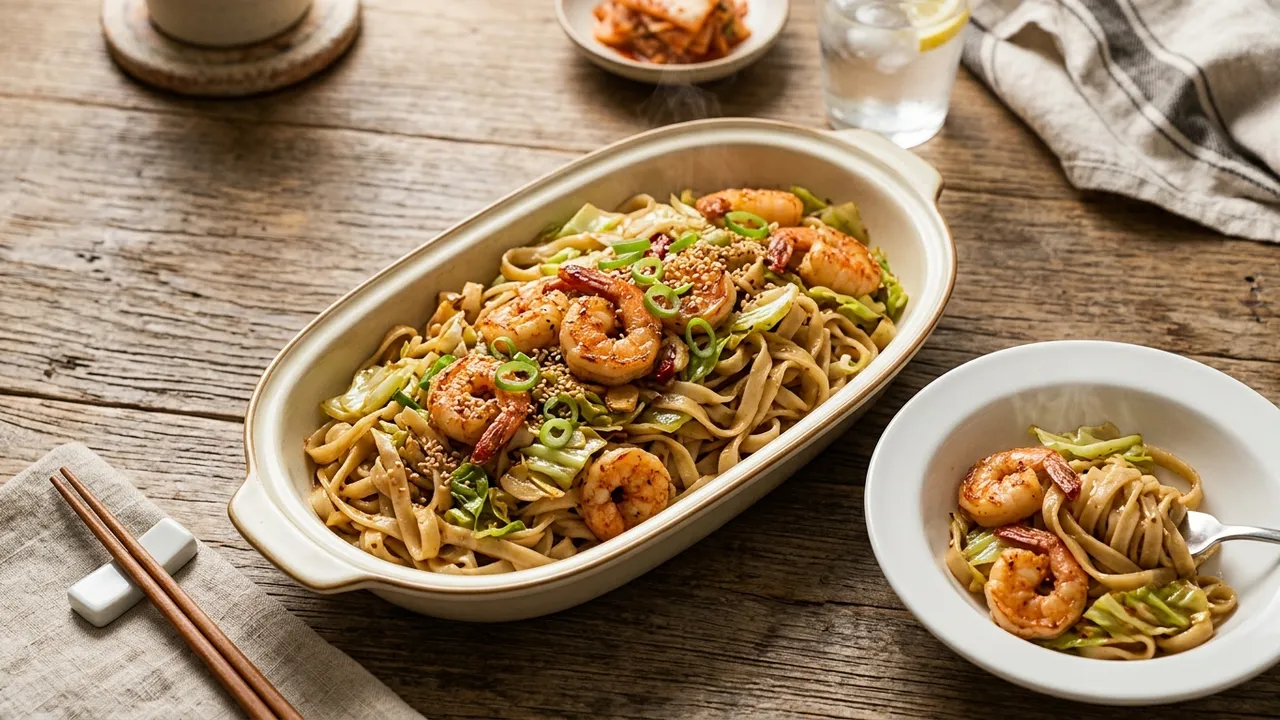
Cabbage Pasta Recipe
* 이미지는 AI가 생성한 참고 이미지로, 실제 조리 결과물과 다를 수 있습니다.
This Cabbage Pasta is a dish that helped my Japanese friend succeed in their diet. It's packed with cabbage for a light meal, and umami is added with shiokonbu (시오콘부) and shrimp.
📝 Editor's Notes
This Cabbage Pasta is an appealing dish that combines the crispness of fresh cabbage with the deep umami of shrimp and shiokonbu (시오콘부).
Its characteristic is that you can enjoy it lightly without feeling heavy, thanks to the generous amount of cabbage.
The subtle aroma released by the garlic, peperoncino, and good quality olive oil stimulates the appetite, and a final drop of sesame oil adds a touch of Korean flavor.
The cooking process is relatively simple, making it easy for beginners to try, and it's perfect for a busy weekday dinner or a light meal.
Especially for those considering a diet, adjusting the amount of pasta makes it a healthy and excellent choice.
🛒 Ingredient Tips
Here are some key ingredient tips that will influence the flavor of this pasta.
First, it's best to choose cabbage with firm leaves, vibrant outer leaves, and a heavy feel.
Fresh cabbage enhances the pasta's flavor by providing a crisp texture.
For shrimp, using fresh ones will give you a springy texture and rich sweetness, but if using frozen shrimp, make sure to thaw and drain them thoroughly.
Finally, as emphasized in the recipe tips, selecting an extra virgin olive oil with a good aroma and flavor will elevate the dish significantly.
It's important to choose a product with low acidity and a fresh scent.
🔄 Substitution Guide
Here are some tips for ingredient substitutions if you don't have certain items or want to try different flavors.
Instead of cabbage, you can use leafy greens like broccoli, bok choy, spinach, or zucchini.
The texture and flavor will differ, but you'll still enjoy the freshness of the vegetables.
If you don't have shrimp or don't enjoy seafood, you can add protein and umami with chicken breast or various mushrooms (shiitake, king oyster, etc.).
Mushrooms are especially a good substitute for vegetarians.
Instead of shiokonbu (시오콘부), you can use kelp powder or one or two tablespoons of tsuyu (쯔유) for umami, but you might lose the salty and chewy texture unique to shiokonbu.
Avocado oil or grapeseed oil can be used instead of extra virgin olive oil, but the fragrant flavor of olive oil may be less prominent.
🥘 Ingredients
👨🍳 Cooking Points
Let's highlight some important cooking points for this pasta.
First, sauté the garlic and peperoncino slowly over low heat in olive oil to fully infuse the flavor.
The key is to be careful not to burn the garlic.
Second, a distinctive charm of this pasta is quickly stir-frying the cabbage over high heat for about 2-3 minutes to keep it crisp, not overly soft.
Third, when adding shiokonbu (시오콘부) and pasta water, it's crucial to quickly toss them to allow the pasta water to blend well with the ingredients and thicken into a sauce.
The starch in the pasta water helps bind all the ingredients together.
Finally, turn off the heat and drizzle a bit of sesame oil to finish with a savory aroma.
👨🍳 Directions
Cook the pasta in salted water according to package directions. Reserve about 2 ladles of pasta water.
In a pan, generously drizzle SABO Organic Extra Virgin Olive Oil. Add sliced garlic and peperoncino and sauté over low heat until fragrant.
Add the shrimp and sprinkle with salt and black pepper. Once the shrimp are partially cooked, add the shredded cabbage.
Sauté until the cabbage is slightly tender, then add the cooked pasta and a bit more olive oil.
Add the shiokonbu (시오콘부) and sauté, then add 2 ladles of pasta water and quickly toss.
Turn off the heat and finish with a light drizzle of sesame oil.
💡 Tips
If you're on a diet, try increasing the amount of cabbage and using only half the amount of pasta.
The key to the flavor is using a good quality organic extra virgin olive oil.
📦 Storage & Reuse
The finished cabbage pasta can be stored in an airtight container in the refrigerator for 2-3 days.
However, pasta tends to get soggy or change texture over time, so it's best to consume it immediately after cooking.
Freezing is not recommended as it can make the pasta texture mealy.
When reheating leftover pasta, you can warm it slightly in the microwave or sauté it gently in a pan with a little olive oil or pasta water over low heat to maintain its moisture.
Leftover cabbage can be wrapped in plastic and stored in the refrigerator, good for salads, stir-fries, or soups.
Unused shrimp can be stored airtight in the freezer for a long time.
🥢 Who This Is For
This Cabbage Pasta is highly recommended for those looking for a light and healthy meal.
It will be an excellent option, especially for individuals on a diet or those aiming to increase their vegetable intake.
Since it's primarily composed of fresh vegetables and seafood, people of all ages can enjoy it without feeling heavy.
Good side dishes include a fresh vegetable salad, a refreshing chilled cucumber soup (오이냉국), or a light clam soup.
It also makes for a wonderful meal when paired with a glass of crisp white wine.
🔥 Nutrition Info
One serving of this Cabbage Pasta (based on 3.5 oz / 100g of pasta) is estimated to be approximately 650-750 kcal.
You can get about 350-400 kcal of carbohydrates from the pasta, and about 12-15g of protein from 6 shrimp.
6-7 oz (175-200g) of cabbage provides about 40-50 kcal, is low in calories, and rich in dietary fiber, which gives a feeling of fullness, and supplies various vitamins such as C and K.
The generous use of olive oil provides about 250-350 kcal of healthy fats, but accounts for a significant portion of the total calories.
While shiokonbu (시오콘부) adds umami, its sodium content is high, so those monitoring sodium intake should adjust the salt seasoning accordingly.
Overall, carbohydrates, protein, and fat are balanced, but for dieting, reducing the amount of pasta and increasing cabbage is effective.
💬 Frequently Asked Questions
- Q. What ingredients do I need for Cabbage Pasta?
- Main ingredients include Pasta, Cabbage, Garlic, Peperoncino, Shrimp. Here are some key ingredient tips that will influence the flavor of this pasta. First, it's best to choose cabbage with firm leaves, vibrant outer leaves, and a heavy feel. Fresh cabbage enhances the pasta's flavor by providing a crisp texture. For shrimp, using fresh ones will give you a springy texture and rich sweetness, but if using frozen shrimp, make sure to thaw and drain them thoroughly. Finally, as emphasized in the recipe tips, selecting an extra virgin olive oil with a good aroma and flavor will elevate the dish significantly. It's important to choose a product with low acidity and a fresh scent.
- Q. What are the key tips for making Cabbage Pasta?
- Let's highlight some important cooking points for this pasta. First, sauté the garlic and peperoncino slowly over low heat in olive oil to fully infuse the flavor. The key is to be careful not to burn the garlic. Second, a distinctive charm of this pasta is quickly stir-frying the cabbage over high heat for about 2-3 minutes to keep it crisp, not overly soft. Third, when adding shiokonbu (시오콘부) and pasta water, it's crucial to quickly toss them to allow the pasta water to blend well with the ingredients and thicken into a sauce. The starch in the pasta water helps bind all the ingredients together. Finally, turn off the heat and drizzle a bit of sesame oil to finish with a savory aroma.
- Q. How should I store leftover Cabbage Pasta?
- The finished cabbage pasta can be stored in an airtight container in the refrigerator for 2-3 days. However, pasta tends to get soggy or change texture over time, so it's best to consume it immediately after cooking. Freezing is not recommended as it can make the pasta texture mealy. When reheating leftover pasta, you can warm it slightly in the microwave or sauté it gently in a pan with a little olive oil or pasta water over low heat to maintain its moisture. Leftover cabbage can be wrapped in plastic and stored in the refrigerator, good for salads, stir-fries, or soups. Unused shrimp can be stored airtight in the freezer for a long time.
- Q. How many calories are in Cabbage Pasta?
- One serving of this Cabbage Pasta (based on 3.5 oz / 100g of pasta) is estimated to be approximately 650-750 kcal. You can get about 350-400 kcal of carbohydrates from the pasta, and about 12-15g of protein from 6 shrimp. 6-7 oz (175-200g) of cabbage provides about 40-50 kcal, is low in calories, and rich in dietary fiber, which gives a feeling of fullness, and supplies various vitamins such as C and K. The generous use of olive oil provides about 250-350 kcal of healthy fats, but accounts for a significant portion of the total calories. While shiokonbu (시오콘부) adds umami, its sodium content is high, so those monitoring sodium intake should adjust the salt seasoning accordingly. Overall, carbohydrates, protein, and fat are balanced, but for dieting, reducing the amount of pasta and increasing cabbage is effective.
- Q. Can I substitute ingredients in Cabbage Pasta?
- Here are some tips for ingredient substitutions if you don't have certain items or want to try different flavors. Instead of cabbage, you can use leafy greens like broccoli, bok choy, spinach, or zucchini. The texture and flavor will differ, but you'll still enjoy the freshness of the vegetables. If you don't have shrimp or don't enjoy seafood, you can add protein and umami with chicken breast or various mushrooms (shiitake, king oyster, etc.). Mushrooms are especially a good substitute for vegetarians. Instead of shiokonbu (시오콘부), you can use kelp powder or one or two tablespoons of tsuyu (쯔유) for umami, but you might lose the salty and chewy texture unique to shiokonbu. Avocado oil or grapeseed oil can be used instead of extra virgin olive oil, but the fragrant flavor of olive oil may be less prominent.
💬 Comments
No comments yet. Be the first to comment!