
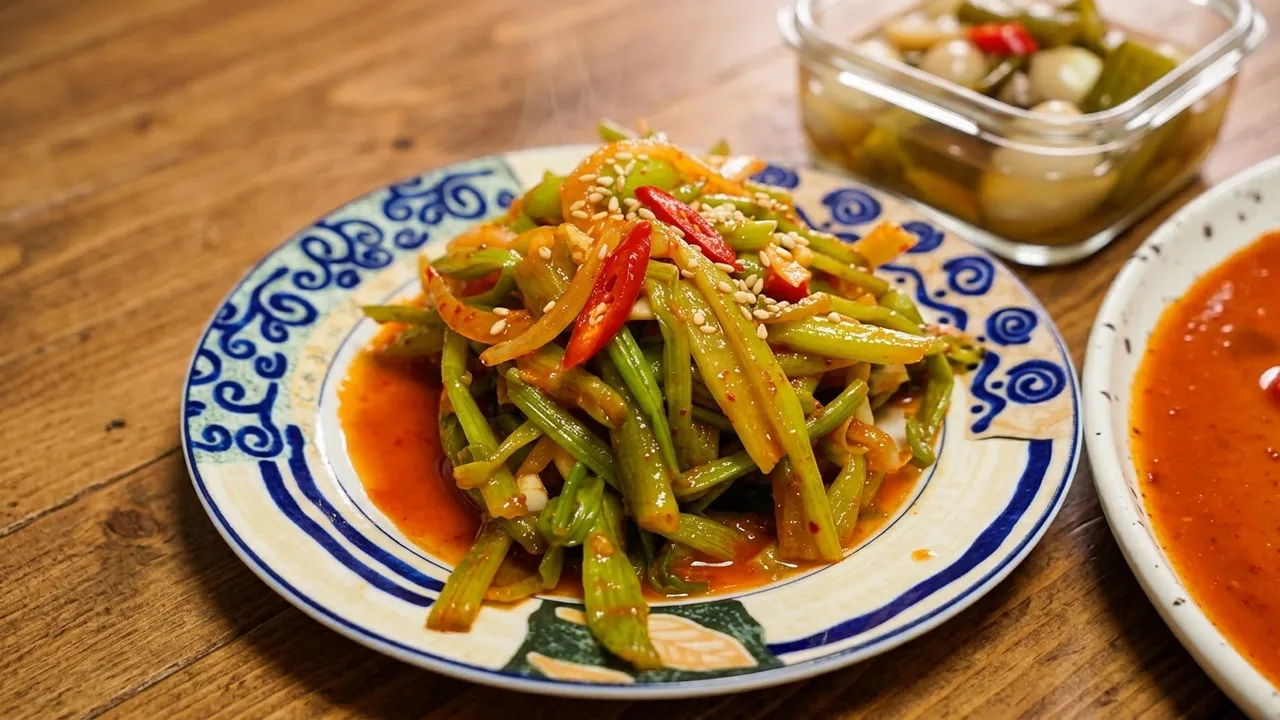
Dalrae Muchim (Korean Wild Garlic Salad)
This is a Korean side dish made by tossing fragrant wild garlic and vegetables in a spicy and sweet seasoning.
📝 Editor's Notes
Dalrae Muchim is a Korean home-style side dish that embodies the fragrant essence of spring.
Its spicy, tangy, and sweet seasoning, combined with the crisp texture of dalrae, makes it incredibly appetizing.
The cooking process is simple, making it easy for even beginner cooks to follow, and you can whip it up quickly if you have fresh dalrae.
Especially during spring fatigue when you feel sluggish, there’s no better dish to revive your lost appetite.
Served over warm rice, it's truly a 'rice thief' (bap-doduk), making you crave more.
The refreshing yet subtly pungent flavor of dalrae will lift your spirits.
🛒 Ingredient Tips
When choosing dalrae, look for plump roots and fresh, vibrant green leaves.
Avoid wilted or yellowed leaves.
For garlic, mincing whole cloves yourself will yield a much better aroma; pre-minced garlic can have a weaker scent and a bitter taste.
Select onions that are firm, shiny, and heavy, and green onions with a long, straight white part and fresh green leaves.
Good ingredients are the fundamental key to delicious food.
🔄 Substitution Guide
If dalrae is hard to find or if you have an allergy, you can use bomdong (Korean cabbage) or baby greens as substitutes.
Bomdong offers a different crisp texture and nutty flavor, providing a unique charm, while baby greens are softer and have a slightly bitter taste.
However, the distinctive pungent aroma of dalrae might not be achievable.
You can use bell peppers instead of Cheongyang chili pepper (청양고추) or red chili pepper to reduce spiciness and add color.
Adding a small amount of doenjang (된장) instead of gochujang (고추장) is also a good way to add a savory depth.
Consider the characteristics of each ingredient and adjust to your taste.
🥘 Ingredients
👨🍳 Cooking Points
The most crucial cooking points for this Dalrae Muchim are 'blanching the dalrae' and 'tossing with seasoning.' If dalrae is blanched for too long, it will become soft and lose its texture.
The key is to briefly blanch it in boiling water with a little salt for 30 seconds to 1 minute, just until it wilts.
After blanching, immediately rinse it in cold water to stop the cooking and squeeze out excess water thoroughly to preserve its crispness.
When tossing with the seasoning, wear sanitary gloves and mix gently by hand to prevent crushing the ingredients and ensure the seasoning is evenly absorbed for the best taste.
Be careful not to mix too vigorously, as it might diminish the dalrae's aromatic qualities.
👨🍳 Directions
Boil water in a pot, add a pinch of salt, and blanch the prepared dalrae.
While blanching the dalrae, mince the garlic, and slice the onion, green onion, Cheongyang chili pepper (청양고추), and red chili pepper into bite-sized pieces.
Rinse the blanched dalrae in cold water, squeeze out excess water thoroughly, then place it in a large bowl with the prepped vegetables.
In a small bowl, combine gochujang (고추장), gochugaru (고춧가루), soy sauce, sesame oil, vinegar, and sugar. Mix well to make the seasoning sauce.
Add the prepared seasoning sauce to the bowl with dalrae and vegetables. Using hands with sanitary gloves, gently mix everything thoroughly to ensure ingredients are not crushed.
Arrange the finished dalrae muchim (wild garlic salad) attractively on a plate and sprinkle with toasted sesame seeds to finish.
💡 Tips
If dalrae is blanched for too long, it will become soft. Blanch it briefly, just until it wilts, to maintain its crisp texture.
Adjust the amount of sugar and vinegar in the seasoning sauce to suit your personal preference for a spicy, tangy, and sweet taste.
When making muchim (seasoned salad) dishes, wear sanitary gloves and mix by hand to ensure the seasoning is evenly distributed and absorbed by the ingredients.
📦 Storage & Reuse
Dalrae Muchim is best enjoyed immediately after preparation, but if there are leftovers, you can store them in an airtight container in the refrigerator for 2-3 days while keeping them fresh.
Freezing is not recommended as it can make the dalrae mushy.
When consuming after refrigeration, it's fine to eat cold, or you can let it sit at room temperature briefly to remove some of the chill.
Leftover Dalrae Muchim can be used as an ingredient for bibimbap (비빔밥) or added to gimbap (김밥) for another delicious variation.
It's most important to consume it quickly while it's fresh.
🥢 Who This Is For
This Dalrae Muchim is highly recommended when you want to boost a lost appetite in spring.
When you feel sluggish and low on energy due to spring fatigue, its spicy and sweet flavor will re-energize you.
It becomes an excellent 'rice thief' (bap-doduk) when eaten with warm white rice, surpassing any other side dish.
It also pairs wonderfully with meat dishes like samgyeopsal (pork belly) or bulgogi (marinated beef) and makes a richer, more harmonious meal when served with a hearty soup.
It's a healthy and delicious side dish that the whole family can enjoy.
🔥 Nutrition Info
Fragrant Dalrae Muchim is also good for your health; per serving, the estimated calories are around 80-100 kcal.
Protein is estimated at about 2-3g, fat at 4-6g, and carbohydrates at 8-12g.
Dalrae is particularly rich in vitamins A and C, which can help boost immunity and alleviate fatigue.
It also contains iron and calcium, beneficial for preventing anemia and promoting bone health.
With various vegetables like garlic, onion, and chili peppers, you can also get dietary fiber and antioxidants, making it an overall well-balanced and healthy side dish.
💬 Comments
No comments yet. Be the first to comment!