
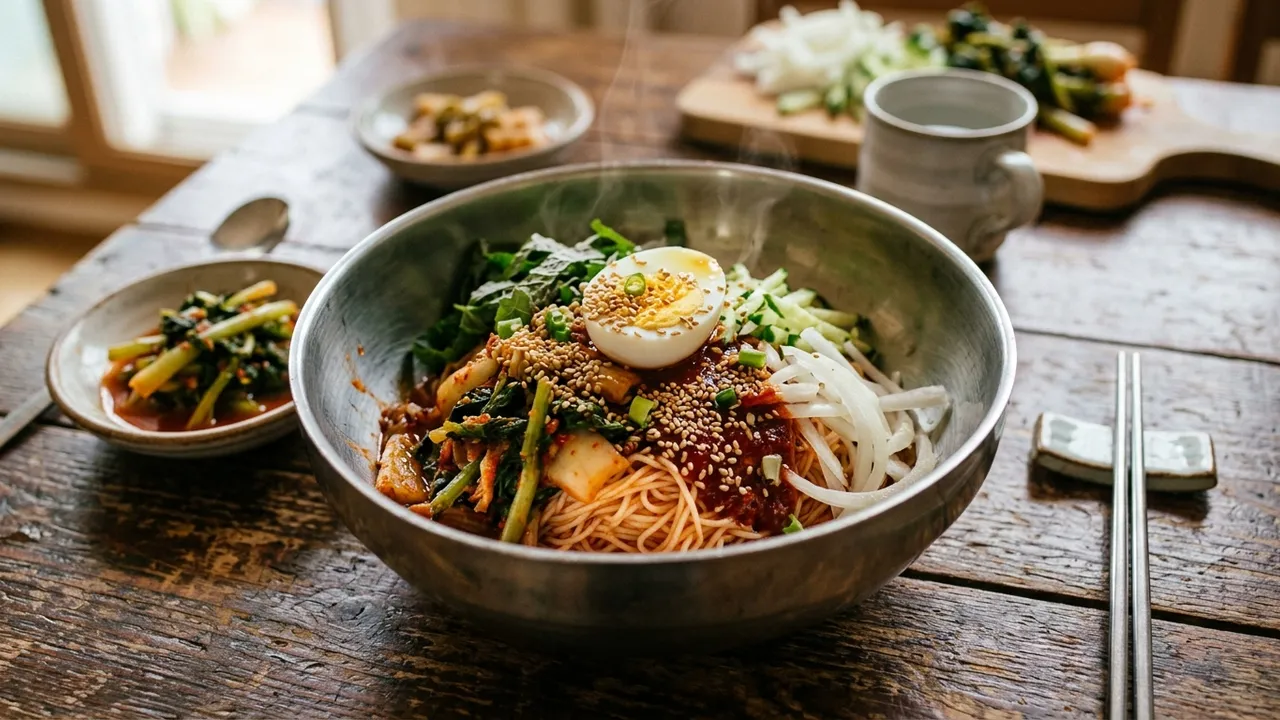
Banghak-dong Dokkaebi Market's Homemade Bibim Yeolmu Guksu (Spicy Mixed Young Radish Kimchi Noodles)
This video presents a recipe for Bibim Yeolmu Guksu (Spicy Mixed Young Radish Kimchi Noodles), imbued with the warm, homemade taste of Mrs. Park Gyu-rye, a merchant encountered at Banghak-dong Dokkaebi Market.
📝 Editor's Notes
Mrs. Park Gyu-rye's homemade Bibim Yeolmu Guksu (Spicy Mixed Young Radish Kimchi Noodles) from Banghak-dong Dokkaebi Market is a summer delicacy that stimulates the appetite. The generous amount of well-fermented Yeolmu Kimchi (열무김치) provides a superb refreshing and crisp texture. Fresh vegetables, chewy somen noodles, and homemade sweet and sour Chojang (초장) blend together to create a dish that will invigorate you after just one bowl. It's easy and simple to make, allowing you to enjoy the beloved market taste at home. The deep flavor of Yeolmu Kimchi is truly the core of this noodle dish.
🛒 Ingredient Tips
The most crucial ingredient in this recipe is 'Yeolmu Kimchi (열무김치)'. You need to add a generous amount of well-fermented Yeolmu Kimchi to truly experience its deep flavor and crisp texture. If the kimchi is too sour, add a little more sugar to balance the taste. It's recommended to make Chojang (초장) yourself instead of using a store-bought version. Mixing double-strength vinegar, sugar, minced garlic, and gochujang (고추장) creates a clean, umami-rich taste without grittiness. Remember that using gochujang instead of gochugaru (고춧가루, chili powder) is Mrs. Park Gyu-rye's secret tip. Toasted sesame seeds, sprinkled as a finishing touch, add a nutty flavor and visual appeal.
🔄 Substitution Guide
Instead of somen noodles, you can use medium-thickness noodles (jungmyeon) or kalguksu (칼국수, knife-cut) noodles for a different texture. Besides Yeolmu Kimchi (열무김치), you can also use Chonggak Kimchi (총각김치, ponytail radish kimchi) or napa cabbage kimchi, though the unique refreshing and crisp taste of Yeolmu Kimchi might differ slightly. For vegetables, feel free to add other greens you have on hand, such as perilla leaves (kkaennip, 깻잎) or various ssam (쌈) vegetables, in addition to cucumber, onion, and lettuce, to create a richer and more diverse flavor. If you must use gochugaru (고춧가루, chili powder) instead of gochujang (고추장), be aware that it might result in a more gritty taste; consider reducing the amount or compensating with other seasonings. Instead of sugar, plum extract (maesil-cheong, 매실청) or oligo syrup can be used for sweetness. A drizzle of sesame oil can also be added for extra umami.
🥘 Ingredients
👨🍳 Cooking Points
Here are a few key cooking points that determine the deliciousness of Bibim Yeolmu Guksu. First, after boiling the somen noodles thoroughly, rinse them several times in cold water to completely remove the starch. This is crucial for achieving chewy and firm noodles! Second, when preparing vegetables, julienne the cucumber and onion, and tear or roughly chop the lettuce by hand to enhance its texture. Third, when mixing all the ingredients, wear a plastic glove and gently toss them by hand. The key is to mix softly so that the seasoning is evenly distributed and the vegetables and noodles are well combined. Finally, remember that Yeolmu Kimchi (열무김치) is the star ingredient, so add a generous amount for the best flavor.
👨🍳 Directions
- 1
Wash and prepare the vegetables: cucumber, lettuce, and onion.
- 2
Julienne the cucumber and onion.
- 3
Boil the somen noodles, then rinse them several times in cold water to remove starch and make them chewy.
- 4
In a large bowl, combine the cooked somen noodles, julienned cucumber, onion, and lettuce.
- 5
Add a generous amount of homemade Yeolmu Kimchi (열무김치) on top of the noodles and vegetables.
- 6
Add an appropriate amount of Chojang (초장), sugar, and minced garlic. Mix all ingredients thoroughly by hand, wearing a plastic glove.
- 7
Neatly plate the finished Bibim Yeolmu Guksu and sprinkle toasted sesame seeds on top to finish.
💡 Tips
In Bibim Yeolmu Guksu, Yeolmu Kimchi (열무김치) is the main ingredient rather than the noodles, so it's important to add plenty of well-fermented Yeolmu Kimchi.
Chojang (초장) is made with double-strength vinegar, sugar, minced garlic, and gochujang (고추장). Using gochujang instead of gochugaru (고춧가루, chili powder) creates a cleaner taste without grittiness.
When making Yeolmu Kimchi, using galchi-changjeot (갈치창젓, fermented hairtail guts), kkanari aekjeot (까나리 액젓, fermented sand lance fish sauce), and saeujeot (새우젓, salted fermented shrimp) enhances the umami flavor. Adding a little cider or soju instead of sugar can aid fermentation and add a refreshing fizz.
Rinsing the noodles thoroughly in cold water after boiling makes them even chewier.
📦 Storage & Reuse
Bibim Yeolmu Guksu is best enjoyed immediately after preparation, as the noodles can become soggy and the vegetables may lose their crispness. If you wish to prepare ingredients in advance, rinse cooked somen noodles in cold water, drain them well, and store them separately. Slice the vegetables and store them in an airtight container in the refrigerator. Likewise, prepare the Yeolmu Kimchi (열무김치) and Chojang (초장) separately, then combine all ingredients just before serving to maintain freshness. Any leftover noodles should be refrigerated and consumed as soon as possible.
🥢 Who This Is For
This Bibim Yeolmu Guksu will be your best choice on hot summer days when your appetite is lacking. Its refreshing, sweet, and tangy taste will sweep away the heat, and the crisp Yeolmu Kimchi (열무김치) and fresh vegetables will revitalize you. It's perfect for a weekend lunch with family or a simple meal when dining alone. If you enjoy spicy food, feel free to add a bit of Cheongyang chili pepper (청양고추), and adding a halved hard-boiled egg will make it an even more satisfying meal.
🔥 Nutrition Info
Bibim Yeolmu Guksu is a balanced meal, with somen noodles providing carbohydrates as the primary energy source, and Yeolmu Kimchi (열무김치) and fresh vegetables offering abundant vitamins, minerals, and dietary fiber. Yeolmu Kimchi is rich in lactic acid bacteria, which support gut health, and its crisp texture also aids digestion. Cucumber, onion, and lettuce are high in water content and rich in potassium, effective for quenching thirst and expelling sodium from the body in summer. However, since it contains sugar and Chojang (초장), be mindful of sugar intake and adjust sodium levels appropriately. Adding more vegetables can further enhance the nutritional balance.
💬 Comments
No comments yet. Be the first to comment!