
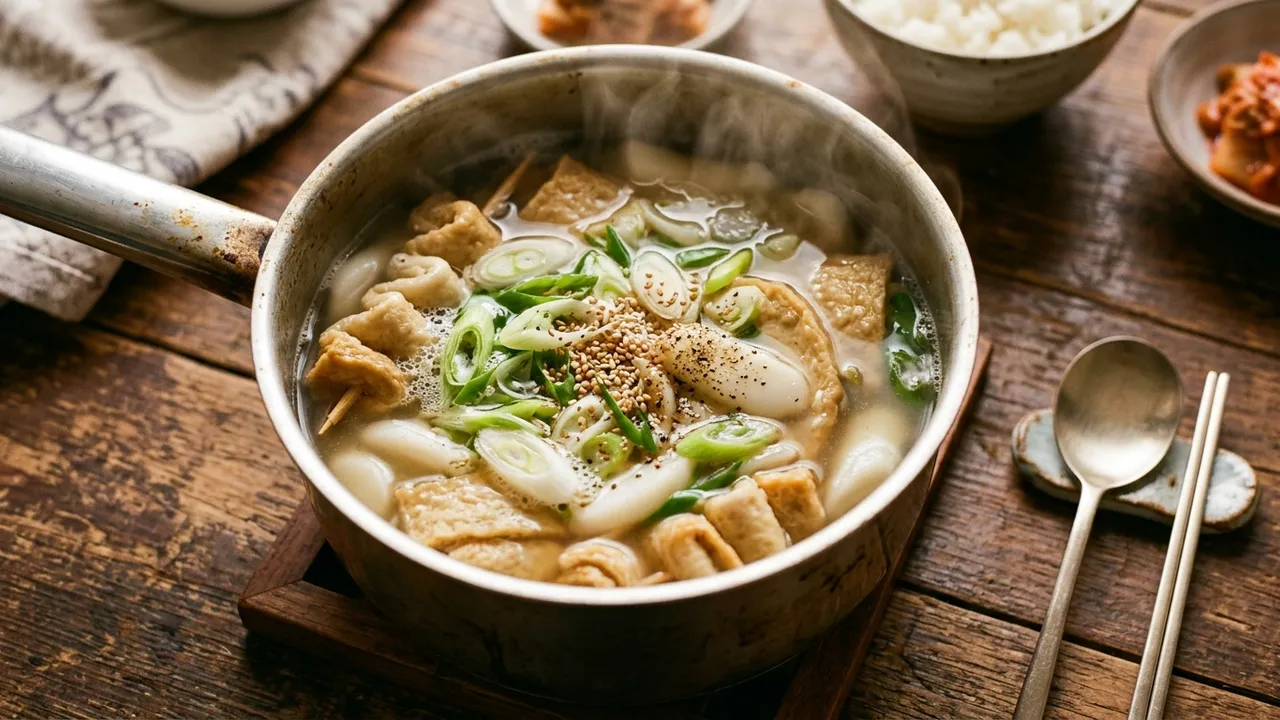
Easy Eomuk-tang (Korean Fish Cake Soup)
This is a quick and easy Eomuk-tang (Korean fish cake soup) recipe, made using frozen fish cakes (eomuk) and wheat-based rice cakes (tteok) with a ready-made fish cake soup mix powder.
📝 Editor's Notes
This easy Eomuk-tang recipe is characterized by its quick preparation using a store-bought fish cake soup mix, frozen fish cakes (eomuk), and wheat-based rice cakes (tteok). You can enjoy a deep and savory broth without the complicated process of making a separate stock, making it an easy challenge for cooking beginners. It's perfect for warming you up on chilly days or serving as a hearty meal in a busy daily life. If you add some spiciness, it also makes an excellent anju (drinking snack). Overall, it has a warm and savory flavor, and adding Cheongyang chili pepper (청양고추) gives it a delightful kick, making it an even more appealing dish.
🛒 Ingredient Tips
For fish cakes (eomuk), choose products with a high fish content for a chewier texture and deeper flavor. Using a variety pack with different shapes and types of fish cakes adds to the fun of eating. For large green onions, select ones with clean roots and vibrant green parts. Since they are used for the broth, it's fine to cut them into large pieces. Frozen wheat-based rice cakes (tteok) can be added directly without thawing, but blanching them briefly in boiling water will prevent the broth from becoming cloudy and make the tteok softer. This small difference will elevate the completeness of your Eomuk-tang.
🔄 Substitution Guide
Instead of fish cakes (eomuk), you can use tofu or mushrooms to enjoy a vegetarian version of Eomuk-tang. Briefly blanch the tofu in boiling water before adding, and for mushrooms, try fragrant ones like shiitake or oyster mushrooms. While the chewy texture might be less prominent, you can enjoy a milder flavor. Replacing wheat-based rice cakes (tteok) with udon noodles or ramen noodles creates a different kind of noodle dish, and adding large diced potatoes can enhance satiety. If bok choy is unavailable, you can substitute it with napa cabbage, bean sprouts, or soybean sprouts. Each vegetable will impart a different crispness or refreshing taste to the Eomuk-tang.
🥘 Ingredients
👨🍳 Cooking Points
The most important cooking point is the ratio of the fish cake soup mix powder. Following the amount of water specified on the product packaging precisely will ensure the optimal flavor, preventing it from being too salty or bland. Next is the timing for adding the wheat-based rice cakes (tteok); while the recipe states they can be added directly, if you want to prevent the starch from the tteok from making the broth cloudy, it's recommended to blanch them briefly in another pot and add them at the end. Fish cakes (eomuk) can become mushy if boiled for too long, so add them once the broth starts to boil and the tteok softens, cooking them only briefly. This is the secret to maintaining their bouncy texture.
👨🍳 Directions
- 1
Add water to a pot.
- 2
Add the fish cake soup mix powder.
- 3
Add an appropriate amount of frozen fish cakes (eomuk).
- 4
Roughly chop and add large green onions for flavoring the broth.
- 5
Once the broth starts to boil, add the frozen wheat-based rice cakes (tteok).
- 6
If you want to add a slight spiciness, add 1 Cheongyang chili pepper (청양고추).
- 7
Add bok choy.
- 8
Add a little soy sauce to enhance the flavor.
- 9
Add a little black pepper.
- 10
Once all ingredients are cooked through, the Eomuk-tang is complete.
💡 Tips
The large green onions are for flavoring the broth, so you can remove and discard them after cooking.
Although cooking frozen wheat-based rice cakes (tteok) separately in another pot usually prevents the broth from becoming cloudy, you can add them directly to the Eomuk-tang if you're short on time.
If you prefer a spicier taste, it's good to add 1 Cheongyang chili pepper (청양고추).
📦 Storage & Reuse
Leftover Eomuk-tang can be stored in an airtight container in the refrigerator for 2-3 days by separating the broth and solid ingredients. If you wish to store it longer, freeze only the broth without the solids, or portion out both the broth and solids for freezing. It can be stored for about a month when frozen. When reheating, warm it slowly over low heat, and if the broth is insufficient, add a little water and re-season to taste. Any leftover fish cakes (eomuk) or wheat-based rice cakes (tteok) can also be used in other dishes like tteokbokki (떡볶이 - spicy rice cakes) or eomuk-bokkeum (어묵볶음 - stir-fried fish cakes).
🥢 Who This Is For
This easy Eomuk-tang is an excellent dish for busy office workers, students living alone, or whenever you suddenly crave a hot soup. It's comfortable for the whole family to enjoy and especially perfect as a late-night snack on a cold winter evening. It goes well as a side dish for rice, and when served with gimbap (김밥) or jumeokbap (주먹밥 - rice balls), it becomes an even heartier meal. For an adult gathering, it pairs wonderfully with a glass of soju (소주).
🔥 Nutrition Info
For this easy Eomuk-tang, a single serving can be estimated to be around 300-400 kcal. It's likely to contain approximately 15-20g of protein from the fish cakes, about 40-50g of carbohydrates from the starch in the wheat-based rice cakes (tteok) and fish cakes, and around 10-15g of fat from the fish cakes and soup mix. Since both the fish cake soup mix and soy sauce are used, the sodium content can be relatively high. Therefore, those with high blood pressure are advised to adjust the amount of soy sauce or consume it with less salt. Small amounts of Vitamin C and dietary fiber can also be obtained from the large green onions, bok choy, and Cheongyang chili pepper (청양고추), helping to balance the nutrition.
💬 Comments
No comments yet. Be the first to comment!