
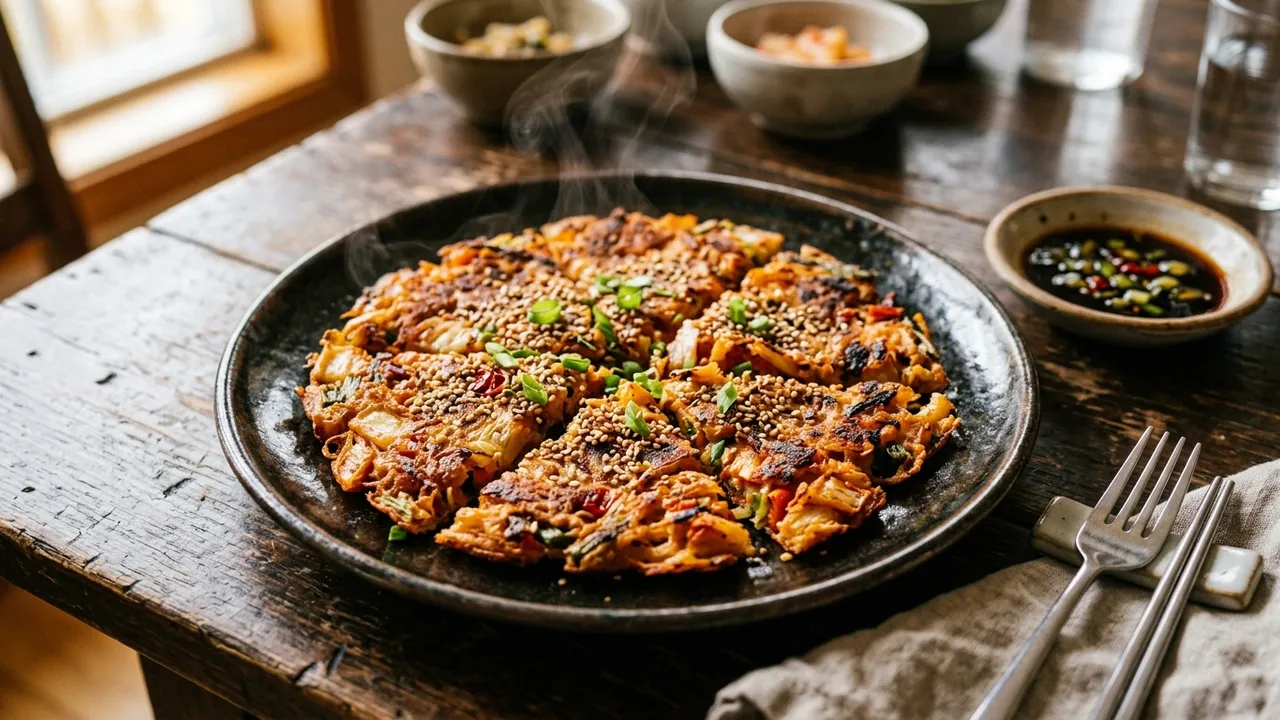
Crispy Kimchi Pancake (Kimchijeon) That Stays Crispy Even When Cold (Using Potato Starch)
Discover the secret to making kimchi pancake (kimchijeon) that stays crispy for a long time without getting soggy. The key lies in using potato starch, cold water, and the right kimchi selection and cooking techniques.
📝 Editor's Notes
The kimchi pancake (kimchijeon) we're introducing today contains a special secret to staying crispy even when cold. By utilizing potato starch and cold water, you can enjoy a crispy outside with a soft, or rather, chewy inside for a long time without sogginess. The combination of well-fermented kimchi's deep sourness and savory oil is exquisite, making it an excellent dish for rainy days, when you're hungry, or as an accompaniment to drinks. Even those who thought making kimchi pancake (kimchijeon) was difficult will be able to enjoy a successfully crispy version by following this recipe.
🛒 Ingredient Tips
For kimchi pancake (kimchijeon), it's crucial to use *mukeunji* (묵은지) that is well-fermented and has developed a rich sourness. Kimchi that isn't fully fermented will struggle to provide a deep flavor and may not pair well with the crispy texture. Squeeze the kimchi to remove excess liquid, but don't discard the juice; add it to the batter to enrich the flavor of the kimchi pancake. Using pancake or frying mix for the flour can add seasoning and contribute to a crispier texture, but regular all-purpose flour works deliciously too. And potato starch is a key ingredient responsible for the crispiness of this kimchi pancake, so make sure to prepare it.
🔄 Substitution Guide
If you don't have *mukeunji* (묵은지) and are using kimchi that lacks sourness, you can compensate by adding a bit more sugar or about 1/2 tsp of vinegar. However, it may not achieve the same depth of flavor as *mukeunji*. If using rice flour instead of wheat flour, you can get a lighter and crispier texture, but be mindful of the batter consistency as it may be more prone to breaking due to the lack of gluten. Cornstarch can also be used instead of potato starch to achieve some crispiness, but it might result in a slightly different texture compared to potato starch's unique chewy-crispy quality. Since starch is key to the pancake's texture, we highly recommend potato starch if possible.
🥘 Ingredients
👨🍳 Cooking Points
Remember these three key cooking points for a crispy kimchi pancake (kimchijeon). First, squeeze the kimchi tightly with both hands to remove as much moisture as possible, then finely chop it into 1.5-2 cm (approx. 0.6-0.8 inches) pieces. Too much moisture will thin the batter and can make the pancake soggy. Second, always use cold water when making the batter. Cold water is the secret to inhibiting gluten formation, which prevents the kimchi pancake from becoming tough and helps maintain its crispiness. Lastly, preheat the pan sufficiently and use a more generous amount of cooking oil than usual. The oil needs to be hot enough to prevent the batter from sticking and allow it to cook quickly, creating a crispy exterior. If oil runs low during cooking, you can drizzle a little more into the center hole, and finishing by briefly increasing the heat at the end will make it even crispier.
👨🍳 Directions
- 1
Squeeze the kimchi tightly with both hands to remove excess liquid, then finely chop it into pieces about 1.5 to 2 cm (approx. 0.6 to 0.8 inches) in size.
- 2
In a large bowl, combine 2 cups of finely chopped kimchi, 1.5 cups of flour (all-purpose, pancake mix, or frying mix), 0.5 cups of potato starch, 1 cup of kimchi juice (김치 국물), and 1 cup of cold water. Mix well until the flour is completely dissolved and a smooth batter is formed. (If the kimchi is not ripe enough and lacks sourness, add a pinch of sugar.)
- 3
Pour a generous amount of cooking oil into a pan, more than you usually would, and preheat it until the oil is hot enough to just start smoking slightly.
- 4
Pour the batter in a circular motion around the edge of the preheated pan. Leave a small hole, about the size of a finger, in the center, then slowly fill in the rest of the batter towards the middle.
- 5
Once the bottom is golden brown and firm, flip it with a spatula. Gently press down on the top surface to ensure it cooks evenly through.
- 6
If the oil runs low during cooking, drizzle a little more into the center hole. Flip it several times to achieve crispiness. Towards the end, briefly increase the heat to make it extra crispy.
💡 Tips
It's best to use well-fermented, deeply sour *mukeunji* (묵은지) for kimchi pancake (kimchijeon). The unique sourness of well-fermented kimchi, when cooked with hot oil, brings out a deep and rich flavor.
If too much kimchi juice (김치 국물) remains, it will add excess moisture to the batter, making the pancake soggy. Therefore, squeeze the kimchi tightly with both hands to remove the liquid before use. Add the extracted kimchi juice to the batter for enhanced flavor, and finely chop the squeezed kimchi into 1.5-2 cm (approx. 0.6-0.8 inches) pieces.
Always use cold water when making the batter. This suppresses gluten development, preventing the kimchi pancake (kimchijeon) from becoming chewy and ensuring it remains crispy.
To achieve crispiness, sufficiently preheat the pan and use a generous amount of oil. Pouring the batter from the edge of the pan and leaving a small hole in the center allows heat and oil to spread evenly, resulting in an even crispier pancake.
📦 Storage & Reuse
Leftover kimchi pancake (kimchijeon) can be stored in an airtight container in the refrigerator for 2-3 days. For longer storage, wrap each pancake individually in plastic wrap or parchment paper and freeze for up to a month. To reheat frozen kimchi pancake, thaw it first, then air-fry at 180°C (350°F) for 5-7 minutes, or pan-fry with a little oil to restore its freshly made crispiness. Avoid microwaving, as it can make the pancake soggy. Leftover kimchi batter can be stored in the refrigerator for 1-2 days; make sure to stir it well before using.
🥢 Who This Is For
This crispy kimchi pancake (kimchijeon) pairs perfectly with a warm glass of *makgeolli* (막걸리), especially on a rainy day – it's an unrivaled match! It's also great as a snack for kids, a delicious late-night meal, or even as a side dish for rice. Recommended accompanying dishes include a refreshing *kongnamul-guk* (콩나물국) (bean sprout soup) or a sweet and sour *musaengchae* (무생채) (radish salad). These will help balance the spicy flavor while stimulating your appetite. It's a wonderful dish for the whole family to enjoy together.
🔥 Nutrition Info
This kimchi pancake (kimchijeon) recipe yields approximately 3-4 servings, with each serving estimated at around 380-450 calories. It is expected to contain about 50-60g of carbohydrates, 15-20g of fat, and 5-7g of protein. Kimchi, the main ingredient, is rich in probiotics, which aid gut health, and provides Vitamin C and dietary fiber. Flour and potato starch are carbohydrate sources that provide energy, while cooking oil contributes savory flavor and energy through fat. Kimchi pancake can be a relatively high-calorie meal, so it's good to consume it in balance with other side dishes.
💬 Comments
No comments yet. Be the first to comment!